
The Newton County Court Calendar
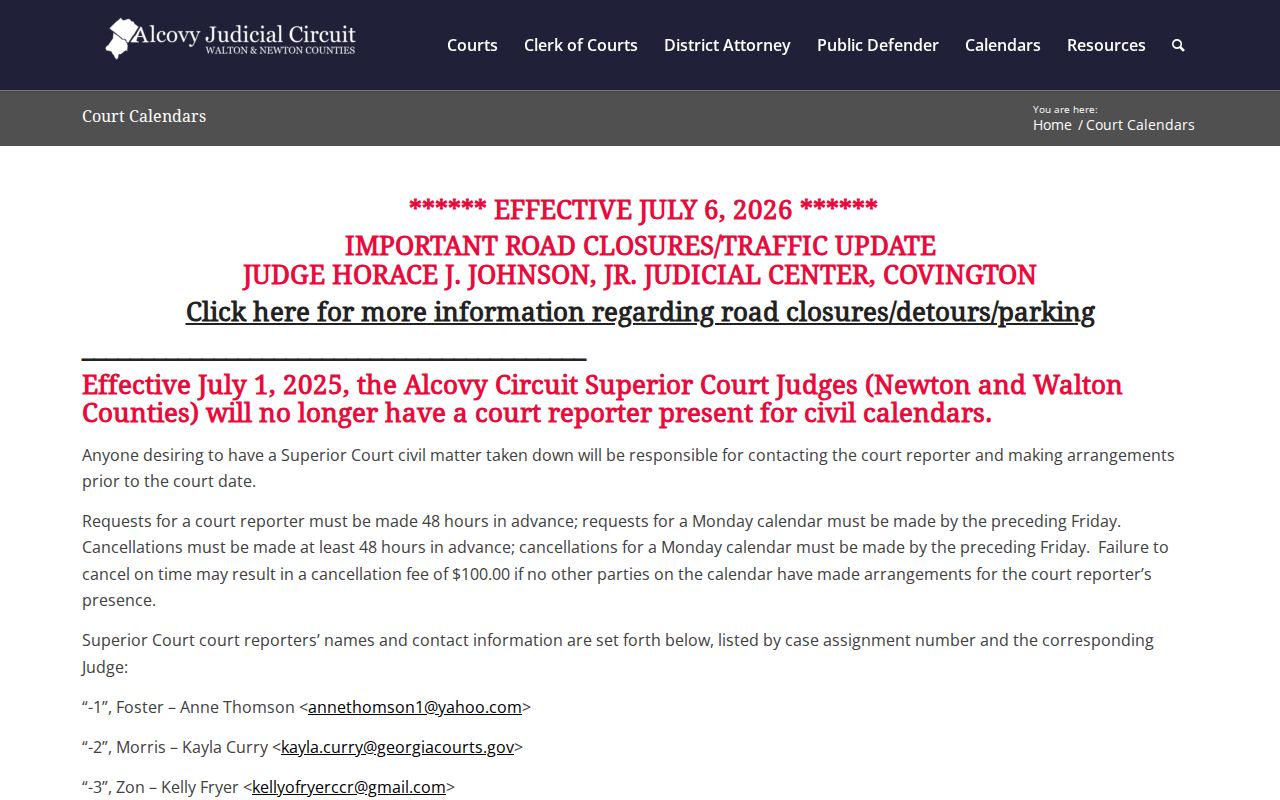
Newton Superior settings come from one place: the Alcovy Judicial Circuit calendar hub. That page gathers judge-specific calendars. It also holds Newton criminal hearing and trial-order documents, the current Superior schedule, and the Newton holiday schedule in one set of links. Expect a mix of labels there. Hearing, pretrial hearing, trial order, civil docket, and criminal hearing each name a type of scheduled event on the court calendar. The hub carries reporter and recording notices alongside them. Its local links show current access at a glance.
Timing matters with any docket search. Check the live hub close to your court date, since a downloaded calendar can go stale, and a trial-order document may organize a later trial rather than announce the final hearing itself.
Newton Calendar Labels Explained
Labels on a Newton court calendar describe purpose, never outcome. A hearing might take up a single motion. A pretrial setting just prepares a case for later resolution. Trial orders assign deadlines and build a trial list. A civil docket can group many cases for call. Criminal calendars work the same way, stacking arraignments, pleas, and motions into one event.
- Setting
- A scheduled court event with a date and purpose.
- Calendar call
- A session used to organize or address listed cases.
- Reset
- A move from one date or setting to another.
- Continuance
- A court-approved delay of an event.
- Disposition
- The result or resolution, which is different from a setting.
Ask one question first: does the label match what you need? Outcomes live in later proceedings, not in the setting name. For attendance instructions, read the current calendar, the notice, and the judge page together.
Find a Newton Court Date
Begin with whatever document ordered you to appear. That paper names the court: Superior, Magistrate, Probate, Juvenile, or a municipal court. Newton lists no State Court in the official circuit directory, so never route a matter there by habit.
- Read the citation, summons, notice, or order for the court and judge.
- Open the official calendar hub and select the matching Newton or judge calendar.
- Search CMWebSearch for a Superior case and review its Proceedings tab.
- Call the Clerk or judge's public staff line when the date or setting type conflicts.
- Visit the correct courthouse counter if online sources do not resolve the issue.
- Use a printed daily calendar only as the court posts or provides it.
CMWebSearch handles three routes into a case lookup: party name, associated party, or exact case number. Prefer the case number when you have it. The Clerk line is 770-784-2035 for anything the search will not answer. Keep tools in their lanes, though. A city payment page does not prove a Superior setting. Georgia Courts E-Access does not replace the county calendar.
Newton Court Calendar Instructions
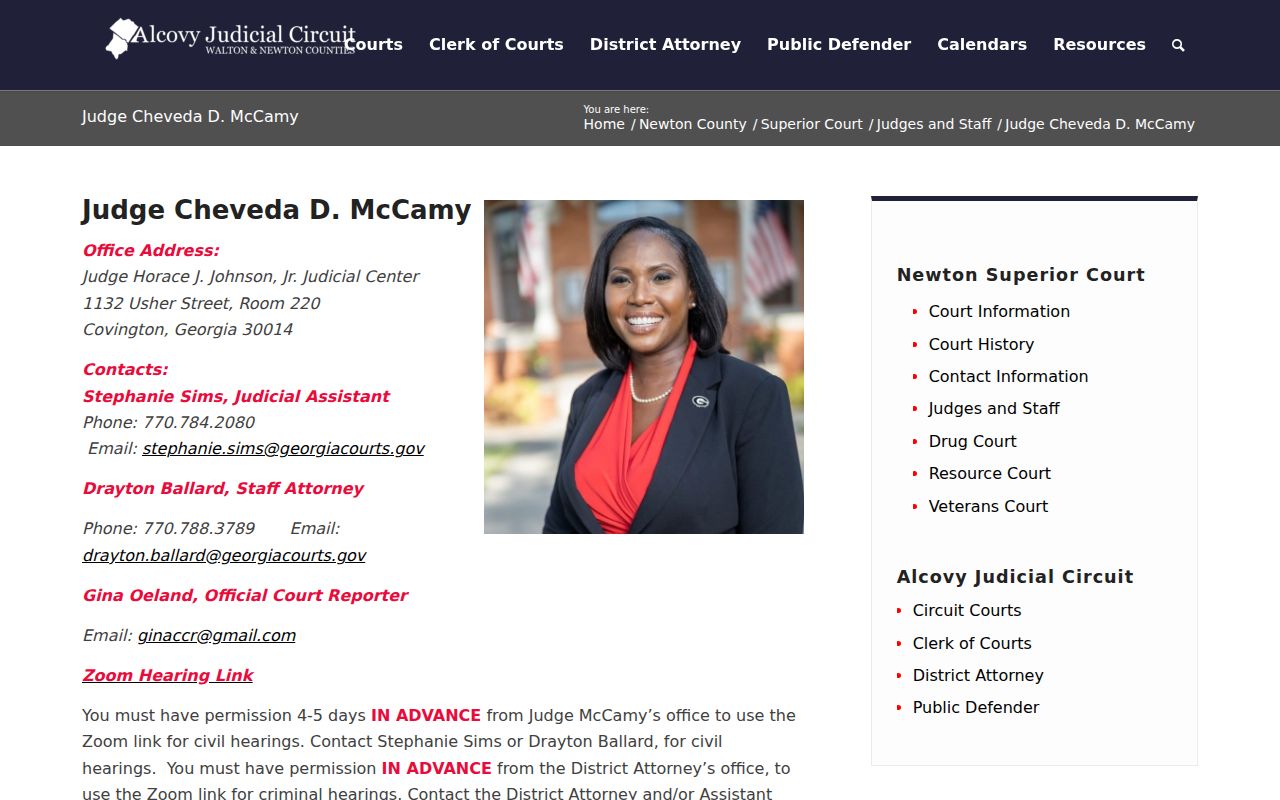
Judge pages add the details a calendar leaves out: courtroom, remote-hearing rules, standing orders, and reporter instructions. Judge Cheveda D. McCamy's page is a good example. It says Zoom requires advance permission, keeps civil and criminal instructions separate, and notes that civil reporters are no longer automatic after July 1, 2025, so request one ahead of time. The official McCamy page links hearing calendars and standing orders.
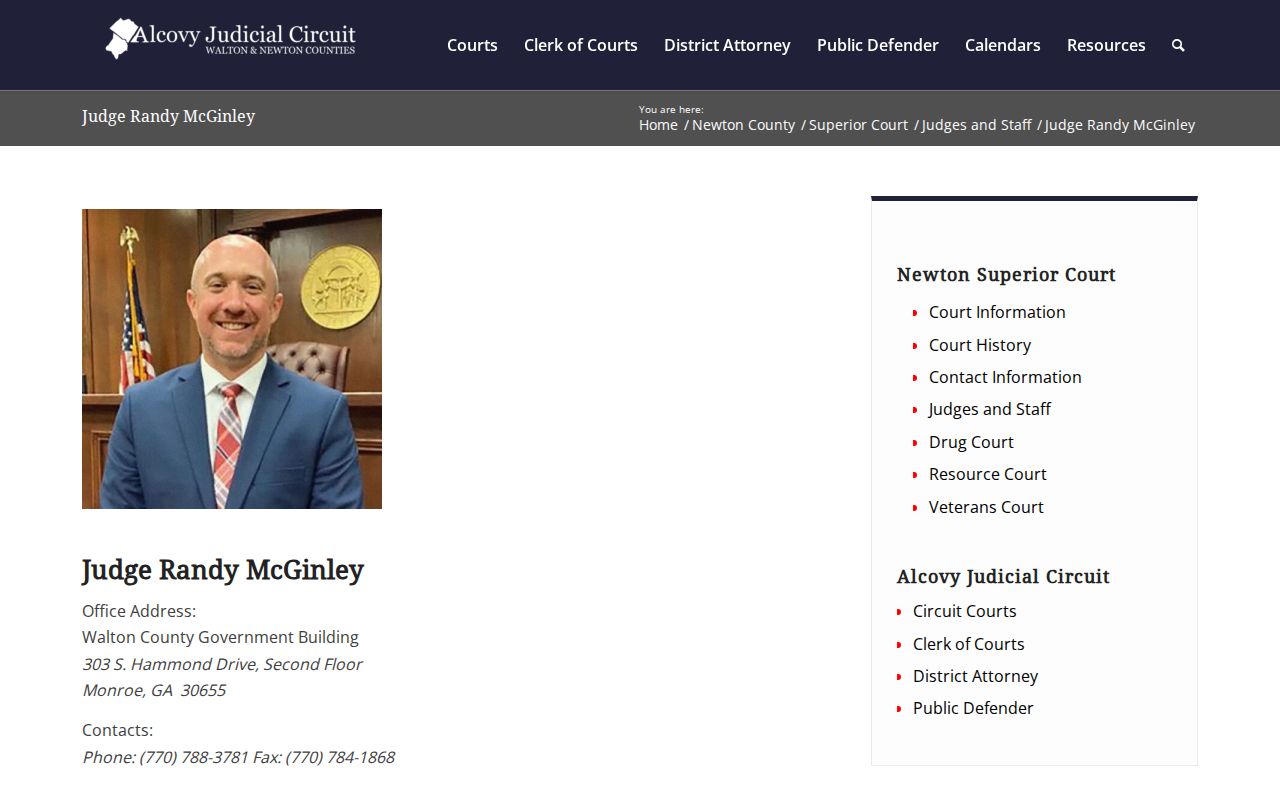
Chief Judge W. Kendall Wynne Jr. posts the same practical guidance for his courtroom, covering calendar, office contact, and reporter questions. The Chief Judge page lays out those details.
Reading a Newton Court Setting
A useful Newton setting carries several fields, and one alone rarely settles anything. Match the case number or caption first. Then confirm the court, the judge, the time, the place, and the setting type before you rely on it.
| Date | The scheduled day; verify that the document is current. |
|---|---|
| Time | The listed start or calendar-call time, not a duration promise. |
| Courtroom | The room or location assigned by the court. |
| Judge | The judicial officer whose page may carry extra instructions. |
| Setting type | Hearing, pretrial, trial order, civil docket, or another event. |
| Case style | The caption used to distinguish the listed matter. |
Remember what a public calendar is not. It is not a full case register. A setting can appear there even while images in CMWebSearch sit behind an approved account, and private fields may stay in the court file where the public calendar never shows them.
Newton Court Calendar Reporter Change
Newton civil practice changed on July 1, 2025. The official judge and calendar materials say so. A civil court reporter is no longer automatic on civil calendars. Request one if you need it, and follow the assigned judge's instructions for how. The calendar hub describes a 48-hour request period. Judge pages may set a practical deadline instead, such as the Monday before a Friday calendar.
Reporter requests are separate from the setting. Confirm the hearing date, the judge's procedure, and whether a record method has been arranged.
Cancel too late and the posted guidance mentions a $100 charge. That figure belongs to reporter cancellation only. It is not a filing fee. It is not a court cost or any statement about the case itself. Ask the assigned chambers or listed staff about current procedure.
Newton Court Calendar Changes
Calendar changes come in three flavors. A reset moves when an event happens. A continuance is a court-approved delay. A cancellation pulls an event off a published list. None of these words means the case was dismissed. Confirm any new instruction with the office named on the notice before you act on it. Nor should you guess a replacement date from a stale PDF. Check the live hub, the assigned judge page, and the CMWebSearch proceedings. If they conflict, call the Clerk or public staff line. One more trap: a pending motion for continuance is not a granted continuance. Your duty to appear stands until the court says otherwise. Emergencies can shift deadlines too. Georgia's emergency-order archive recorded Newton entries during Hurricane Helene in 2024. For current settings, the local calendar and court notice control.
Newton Recording Rules
A public setting does not authorize recording in Newton County. The Newton recording order sets real conditions first. Your request must list the case style, the parties, and the case number. File it with the Clerk. Then present it to the judge at least 24 hours before the proceeding. Cellphones may come into the building. But they must stay off inside the courtroom. Courthouse security rules still apply.
Calendar access and recording permission are separate. A visible date or public hearing does not grant permission to record.
Use the calendar to plan around court dates, nothing more. Do not photograph private litigant details from it. A printed calendar page is not the complete docket either. The Clerk's record and the judge's order remain the sound sources.
Missing a Newton Court Setting
Call the court named on the notice right away. Have the case number, case style, missed date, and setting type ready when you do. Ask whether a later order or reset has been entered. Then ask how to get a copy. Paying through a city portal, leaving a message, or filing a document does not cancel a duty to appear.
Act promptly. A missed date can have case-specific consequences, and only the responsible court can state the next required step.
For a Newton Superior matter, start with the Clerk and the assigned judge's public instructions. Probate, Magistrate, Juvenile, and municipal matters each belong to their own office. The court can confirm record facts and procedure; legal advice should come from a qualified lawyer.
Newton Courthouse Calendar Routing
The Judge Horace J. Johnson, Jr. Judicial Center puts several Newton County courts under one roof. Yet each court keeps its own calendar. Head to the first floor for Probate, Magistrate, and Juvenile offices or courtrooms. Superior Court and the judges' chambers sit on the second floor. The Superior Clerk works out of Room 338 on the third. Arrived with the wrong calendar? Match the court name on your notice before picking an office.
General courthouse hours run 8:00 a.m. to 5:00 p.m., Monday through Friday. The Clerk's public counter closes at 4:45 p.m., though. The directory lists separate phone lines for the Superior Clerk, Juvenile, Magistrate, Probate, and District Attorney. Calling the right office beats guessing one court's date from another court's calendar.
Bring the notice and the exact case or citation number to the counter. Security and courtroom phone rules still apply. Even a quick visit to confirm a setting counts.