
How to Search Newton Criminal Dockets
Start a Newton County criminal docket search with the Clerk of Superior Court. Its CMWebSearch landing page is the entry point. Accept the conditions first. Then search by Party Name, Associated Party, or an exact Case Number. Type the last name before the first, skip suffixes, and use at least two letters. Court, division, filing dates, and status filters trim a long result list. Accuracy is not guaranteed, the portal warns. If a case you know exists does not appear, try a sound spelling variation.
If the index alone is not enough, other options exist. Call the Clerk. Visit the counter. Ask at the courthouse, check judge calendars, or send a written copy request. You can also apply for an approved account. An index entry is not the full file, though. Images in the Proceedings tab require Clerk approval and may require payment.
- Read the citation or notice and identify the court.
- Search the exact party format or case number.
- Open the matching index and note its court, filing date, and status.
- Review proceedings for settings, filings, and disposition entries.
- Ask the proper clerk for an image or certified copy.
Newton Criminal Courts by Charge
Which Newton County court holds a criminal docket depends on the charge. Superior Court tries felonies and serves as the county's main general-jurisdiction criminal court. Its Criminal Division takes misdemeanor and felony filings, accusations, indictments, citations when applicable, and pleadings. Magistrate Court issues arrest warrants, holds commitment hearings, and handles specified misdemeanors like bad-check cases. Municipal courts cover city ordinance and traffic matters. Juvenile Court handles delinquency cases under stricter confidentiality rules.
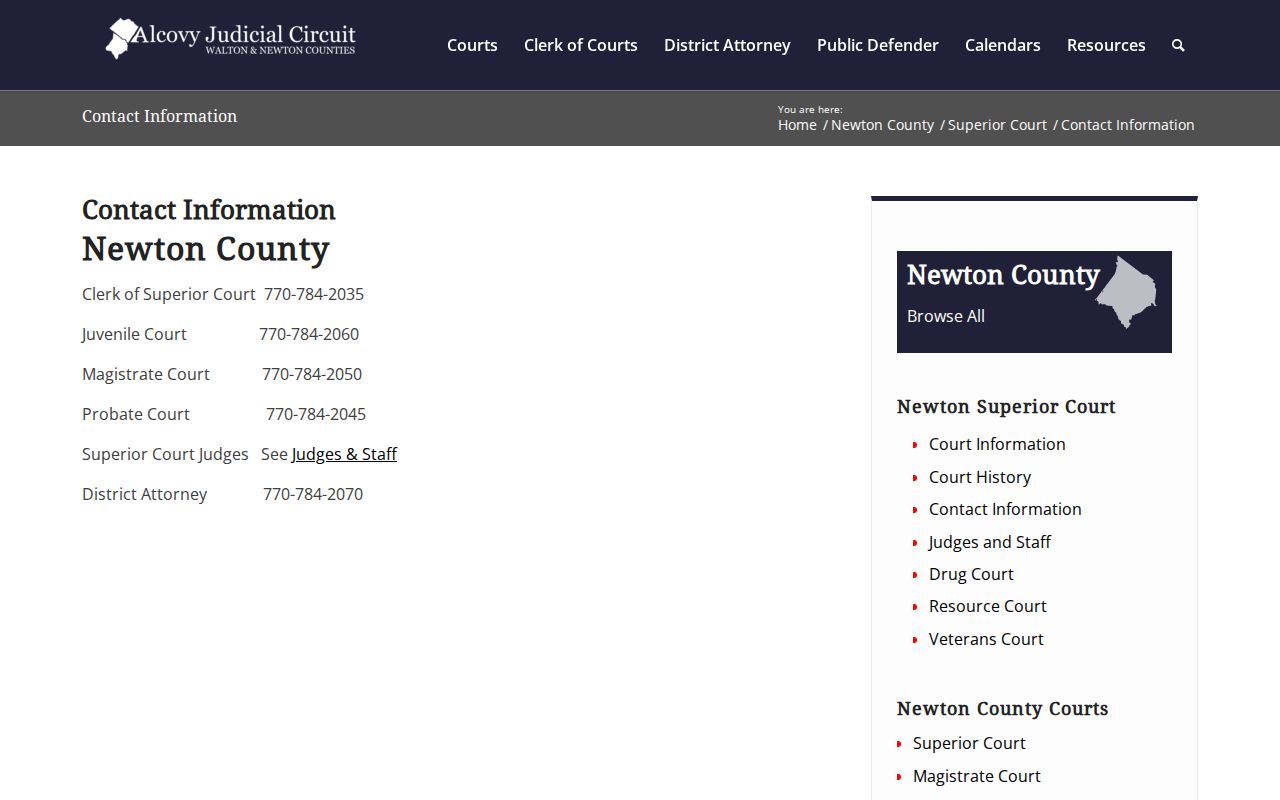
The split trips up a lot of searchers. A city citation never becomes a Superior case just because it happened in Newton County. And a warrant-stage Magistrate entry does not prove a felony has reached Superior Court. Start with the office printed on your paperwork. The court phone directory lists separate lines. Those lines cover the Clerk, Magistrate, Probate, Juvenile, and District Attorney.
What a Newton Criminal Docket Shows
The public index works in layers. Each result row gives basic case metadata. Open a case and a Proceedings tab may appear, listing events in order. Just know the limits: the official guide does not promise that every historical document is digitized, or that any image opens to a guest.
| Case number | The court's unique identifier; Newton publishes no safe format to guess. |
|---|---|
| Party or caption | The indexed person, organization, or case style. |
| Filing date | When the action entered the court, not the hearing date. |
| Court and division | The forum responsible for the docket. |
| Status | The portal's current index category. |
| Proceeding | A filing, hearing, order, disposition, or other event. |
A calendar PDF can list a hearing type and date while saying nothing about the pleadings or the final result. When you find a case number, copy it exactly. Save it as printed by CMWebSearch, since no single official local pattern applies.
Newton Criminal Docket Clerk Fallback
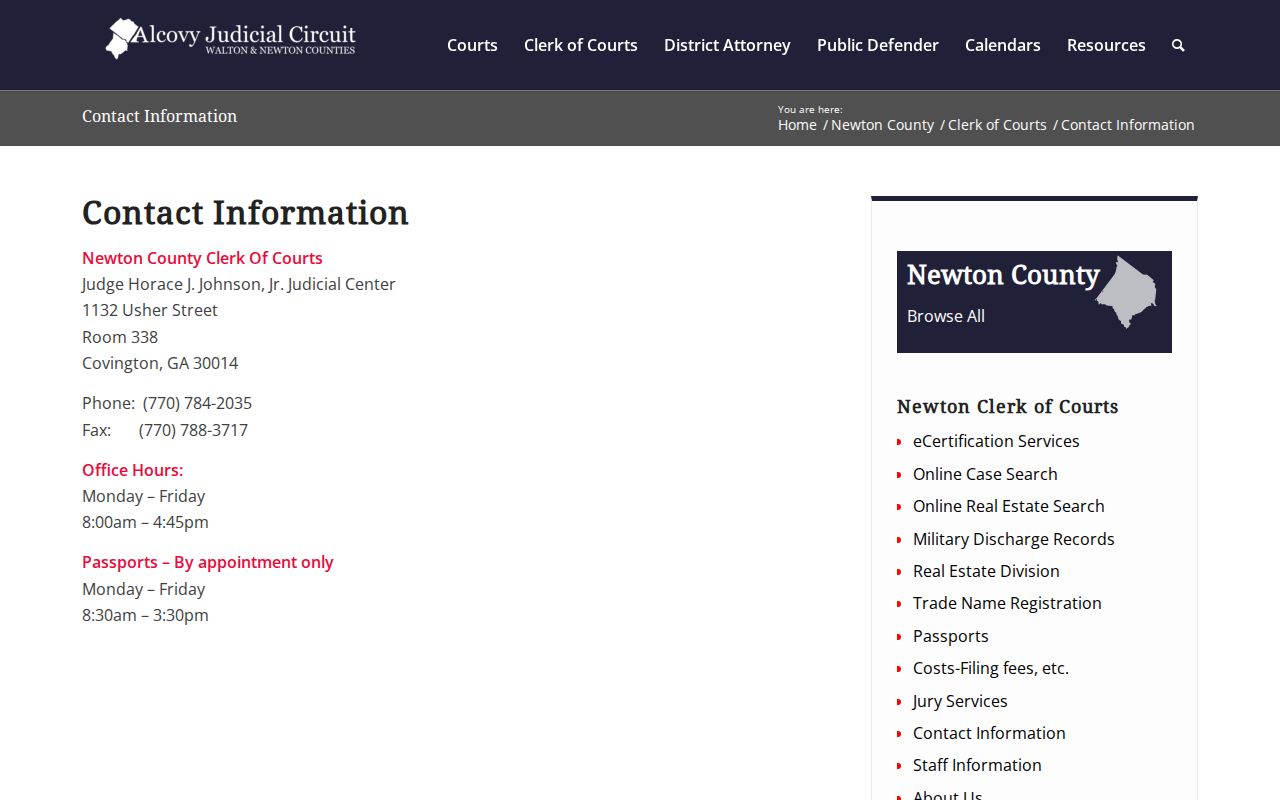
When the online docket search stalls, go to the Clerk of Superior Court in person. The office sits in Room 338 of the Judge Horace J. Johnson, Jr. Judicial Center. The address is 1132 Usher Street, Covington. Hours run 8:00 a.m. to 4:45 p.m., Monday through Friday. The Clerk line is 770-784-2035. Bring the case number and name spelling. Add the approximate year, division, and the document type you need. Those details separate similar names and cut down false matches. The official Clerk contact page carries the location and current routing details.
A phone call can confirm the right request channel. Staff cannot replace a judge or give legal advice, though. Use fax or mail only where the Clerk accepts that route, and describe the exact record you need.
Stages on a Newton Criminal Docket
A Superior criminal docket often starts with an accusation or indictment. From there it may record arraignment, motions, pretrial settings, a plea or trial, disposition, and sentencing. The order varies. Read the entries with care. A reset only moves a setting. It does not dismiss a charge. A calendar call prepares cases for court and is not itself a final result.
Docket flow: Filing › Arraignment › Pretrial › Plea or Trial › Disposition › Sentencing
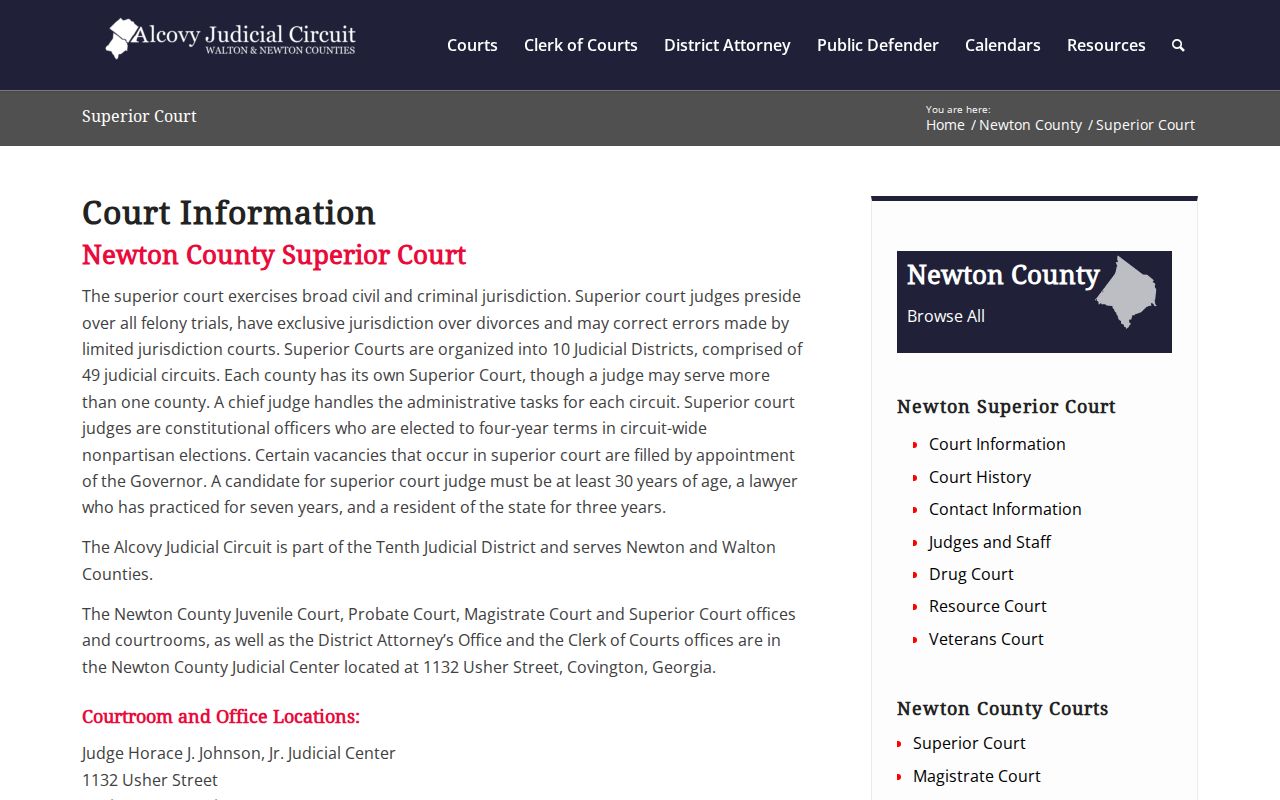
The official Superior Court page asks attorneys to speak with clients before criminal calendar call.
Newton Specialty Court Entries
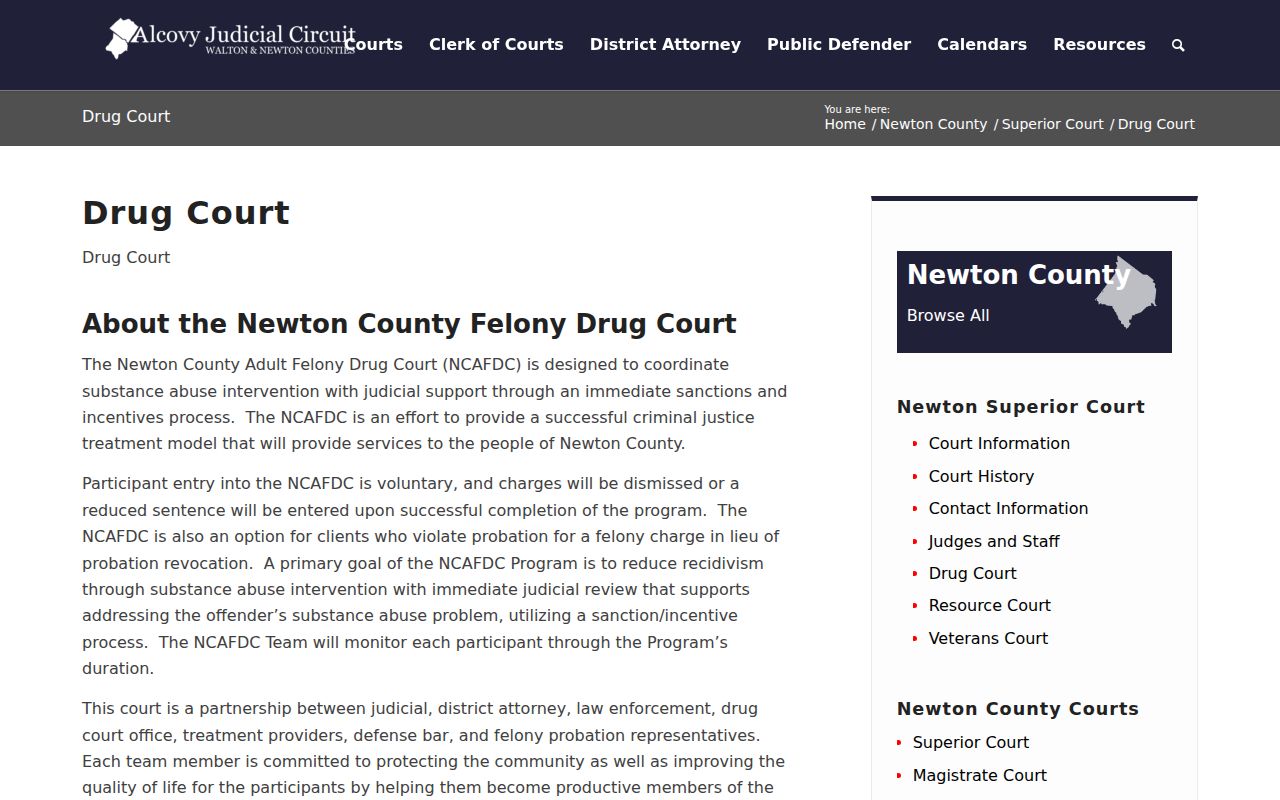
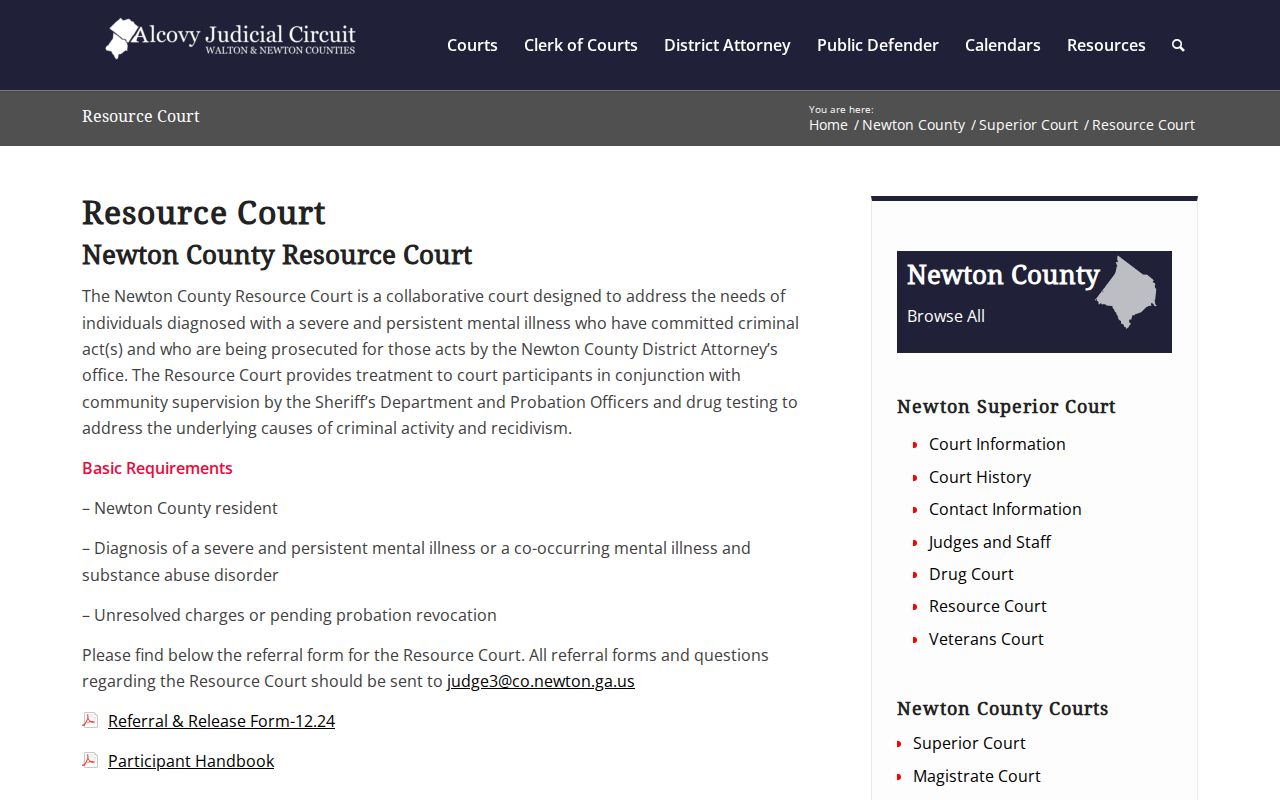
Adult Felony Drug Court, Resource Court, and Veterans Treatment Court sit beside the Newton County criminal docket. They are not in it. These are programs, not separate public name databases. Drug Court pairs voluntary treatment with supervision, sanctions, and incentives for eligible cases. Finish successfully and the official terms may allow dismissal or a reduced sentence. Resource Court serves eligible people with severe or persistent mental illness or co-occurring conditions. Veterans Treatment Court works with eligible veteran defendants charged with felonies. An underlying case may show a public event. Clinical, treatment, and case-management details stay private. The Drug Court description lays out the public program framework.
The Resource Court page provides a second official description.
Which Newton Court Holds Criminal Dockets
The custody rule is simple: ask the court that created the record. The Superior Clerk holds Superior criminal filings. Magistrate staff keep matters within their jurisdiction, and Juvenile staff keep youth cases. A municipal clerk holds that city's traffic and ordinance record. Georgia Courts E-Access can help identify a provider. But no unified statewide public criminal docket exists to replace Newton's county index.
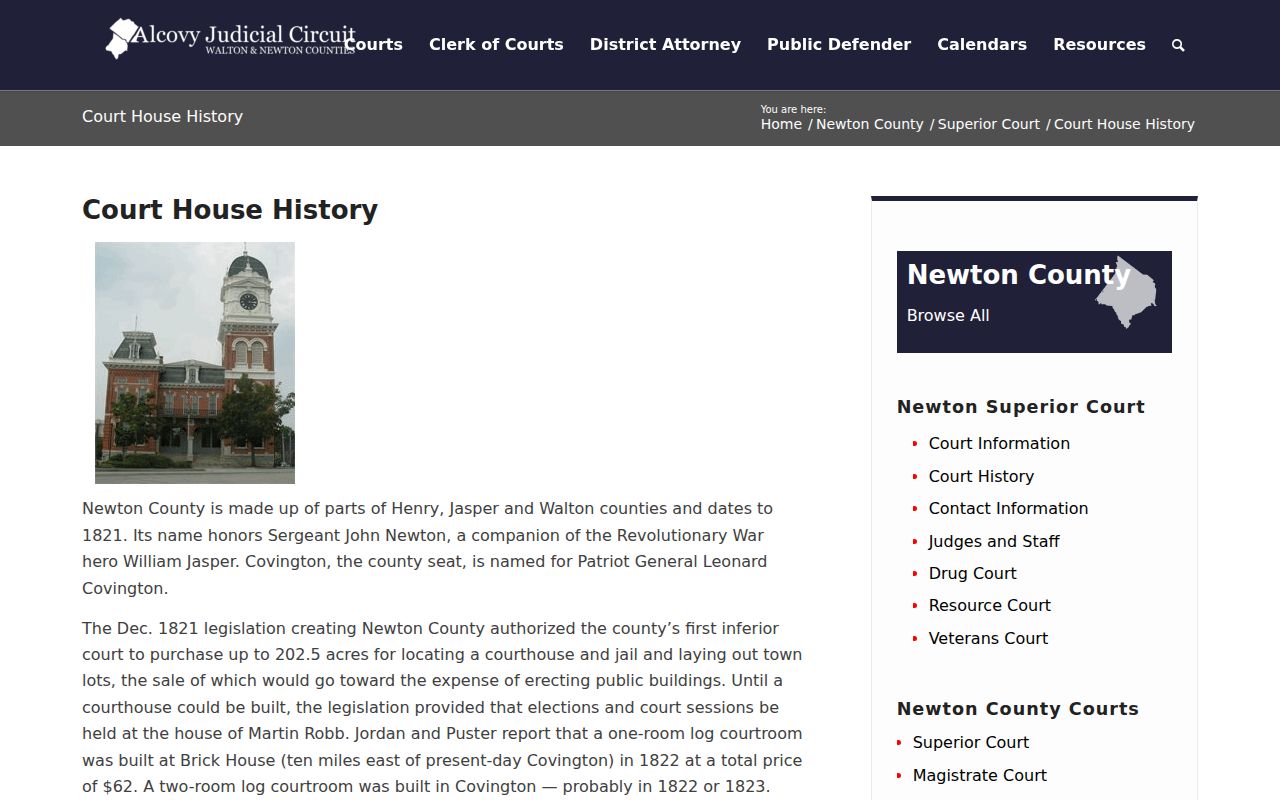
The building itself helps with routing. Probate, Magistrate, and Juvenile sit on the first floor of the Judicial Center. Superior Court and its chambers are on the second. The Superior Clerk is on the third. The official court history traces the system through the modern center.
When Newton Results Are Missing
An empty search screen proves very little. One typo in a case number sinks the lookup. So try the name route instead and adjust from there: flip the name order, drop a suffix, test a spelling variation, widen the filing dates, and clear any optional filters. Also confirm the case actually sits in Newton Superior Court. Criminal matters sometimes land in a city court, or in Probate, Magistrate, or Juvenile. Those dockets live elsewhere.
Keep the source context. Record the spelling, court, filing year, and number on the notice before calling the Clerk.
CMWebSearch treats guest index use and approved image access as two different things. So a missing clickable image may simply mean the account lacks approval. That is not proof the proceeding is absent. When you need certainty, ask the Newton Clerk. Ask for a specific pleading, order, or disposition.
Newton Criminal Docket Access Limits
Georgia law leans toward public access to court records. But a criminal docket still answers to statutes, court orders, protected identifiers, and custodian rules. For documents, Newton County sends requests to the Clerk who handles that case. It does not use the general county open-records inbox. Juvenile records follow separate treatment of their own. And sealed material never becomes public through an index search.
Key access rules:
Georgia Open Records Act, O.C.G.A. § 50-18-70 et seq. supplies the broad access baseline, subject to exemptions.
Uniform Superior Court Rule 21 governs public access and restriction of court records.
Georgia juvenile confidentiality guidance explains the distinct treatment of youth records.
Public means obtainable through the proper channel. It does not promise free, instant, or online. Verify any critical docket entry with the court that maintains it.
Newton Criminal Docket Terms
Five words carry most of the weight on a Newton criminal docket. An accusation and an indictment are charging instruments under Georgia procedure. A setting is simply a scheduled event. A proceeding is the broader chronological entry CMWebSearch displays. It may describe a filing, a hearing, an order, or an outcome. The disposition is where the court records the result.
- Calendar
- A schedule of events, not the complete case history.
- Proceedings tab
- The portal layer listing chronological activity and available image controls.
- Certified copy
- A copy authenticated by the court custodian.
- Sealed
- Restricted from public access under law or court order.
Knowing these terms prevents two common mistakes. One is reading a hearing date as the outcome. The other is mistaking an index line for the filed document itself. When an entry's exact effect matters, request the underlying public order from the Newton Clerk.